David is from Ohio. Lisa is from Kansas. They met, moved to South Bend, Indiana, to attend grad school, and had twin boys. And then another boy. And then a girl.
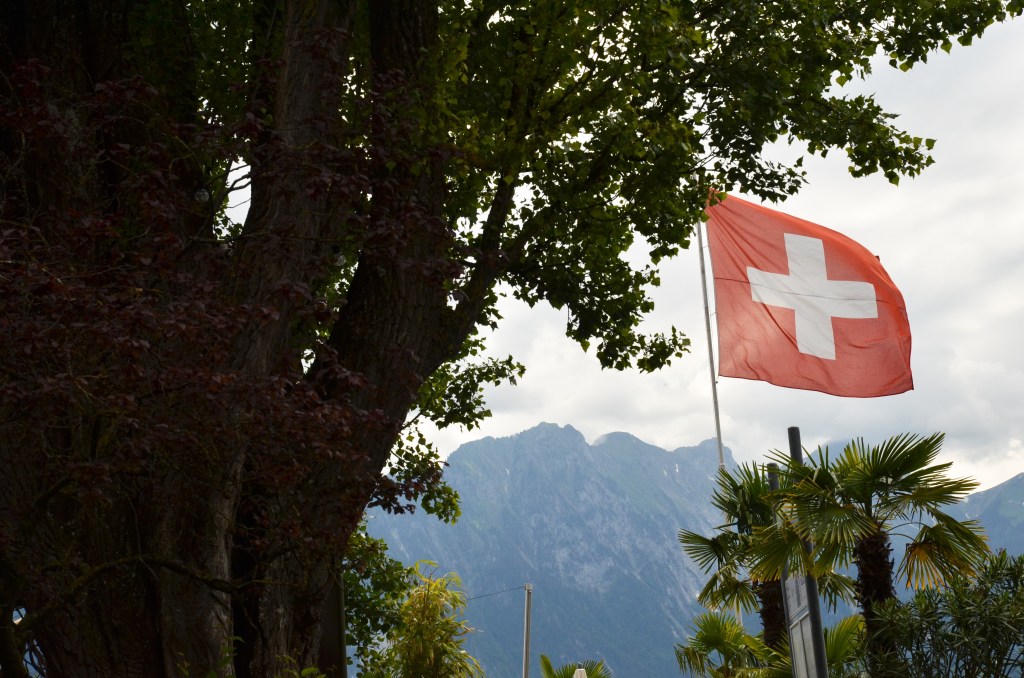
Both of our families have deep roots in the Swiss countryside.
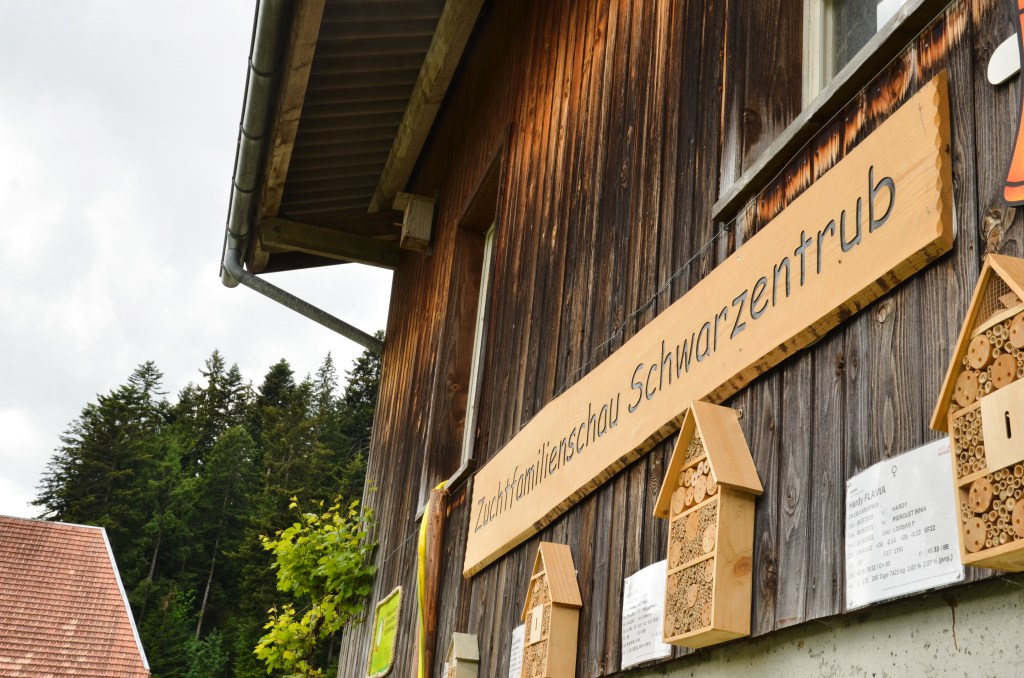
My maternal grandfather’s family, the Swartzendrubers, trace their story back to this farm:
Apparently there are various theories about where the “Swartz” (meaning “black”) comes from. Did they grow dark colored grapes? Did the water on their farm appear darker than the crystal blues of the streams below because it ran through carbon?
The other side of my maternal lineage spells its name Ewy. We’re pretty sure this spelling evolved from “Aebi,” which we spotted on this contraption around the corner of the Schwarzentrub barn.
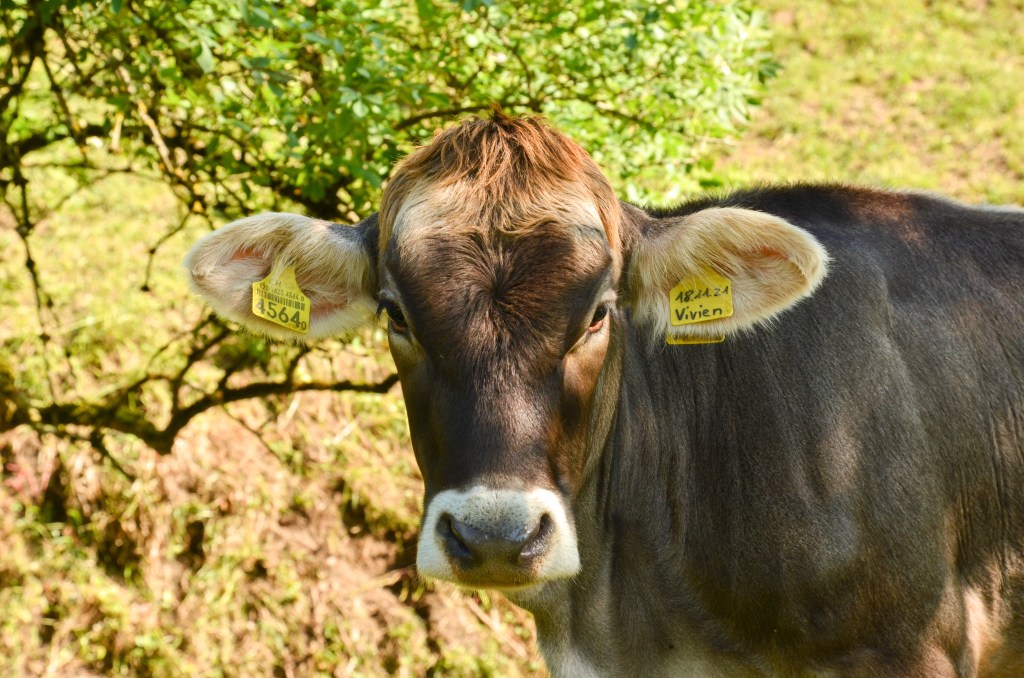
My dad’s family, the Weavers, came from a nearby area. We drove through here too, but couldn’t quite find the original weaving shed that gave us the family name. We did see beautiful green hills, farmland, and happy cows.
Say hello to “Vivien.”
I grew up thinking of my family lineage as German, but I’m realizing that this isn’t true. According to the (admittedly limited) records we’re working our way through, both sides of my family are very much Swiss.
It may sound overly sentimental of me to say this, but it makes sense. I’m starting to understand why so many of my relatives feel attached to Lancaster County, Pennsylvania (which looks very much like this part of Switzerland), and why I’m always pulled to wide open spaces and mountains. Even the human genome project is beginning to reveal traces of social memory embedded in our genetics. It seems very possible that even things like our aesthetic preferences, traumas, and moral frameworks travel through family genetics.
Our families’ shared history converges in Switzerland because of the the Swiss Anabaptist movement.
Our Anabaptist forebears were not so popular. They denied the state’s right to dictate religious identity through baptism and to compel military participation. In other words, when Christian nationalism was the unquestioned status quo, they not only questioned, they resisted. These were not the “quiet-in-the-land” Mennonites that followed them. These people preached their resistance. Loudly.
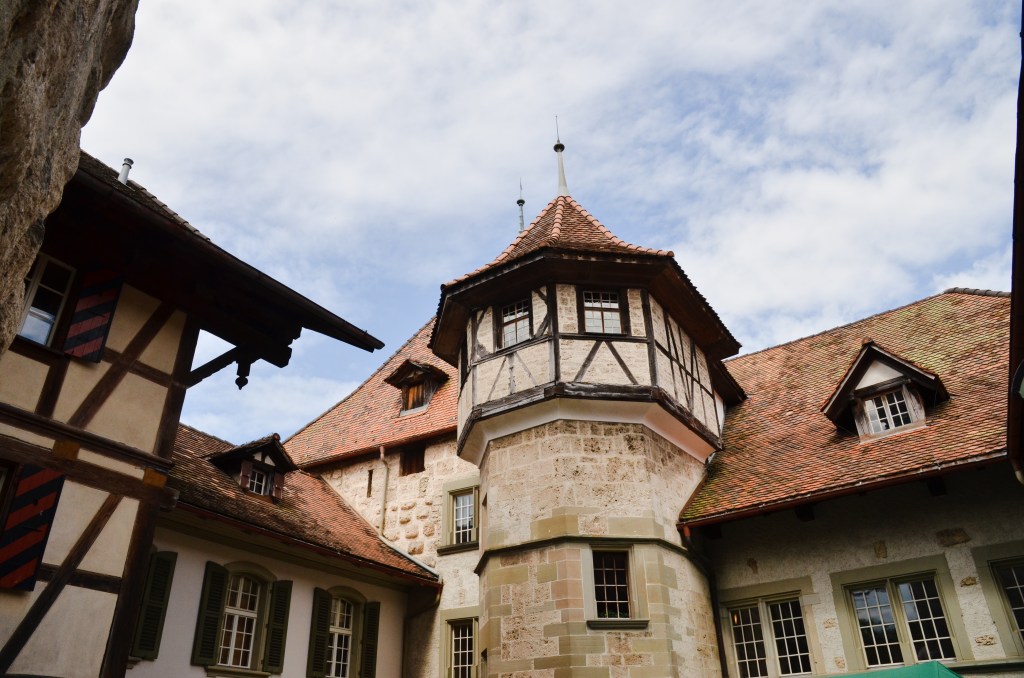
And they paid for it. The authorities hunted them down and sometimes imprisoned them in places like Trachselwald Castle:
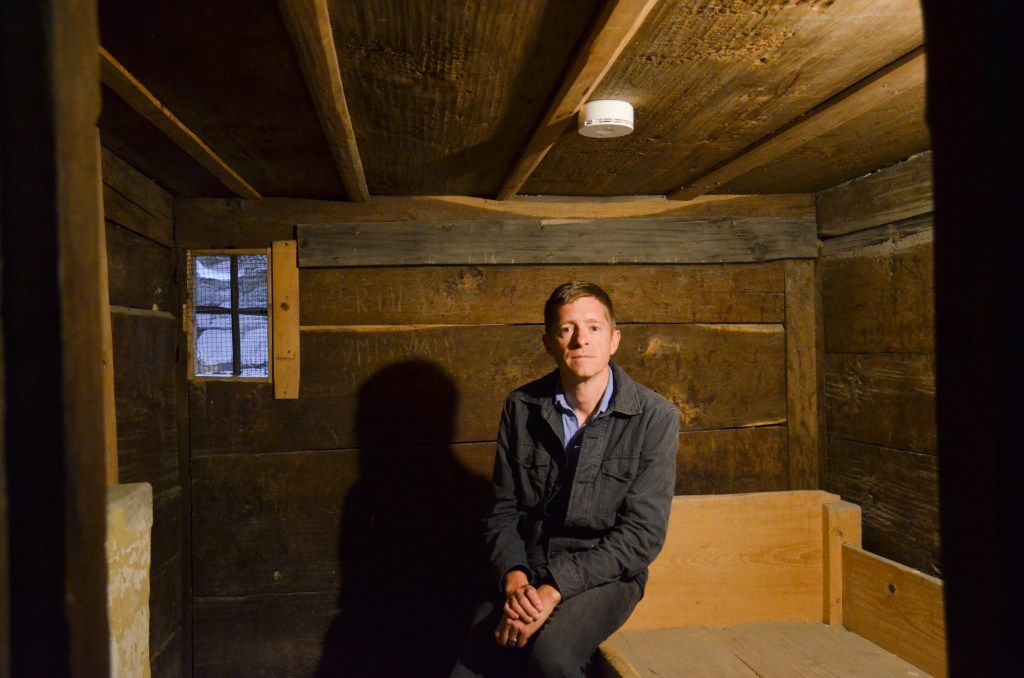
David, contemplating the experience of religious persecution in one of the cells:
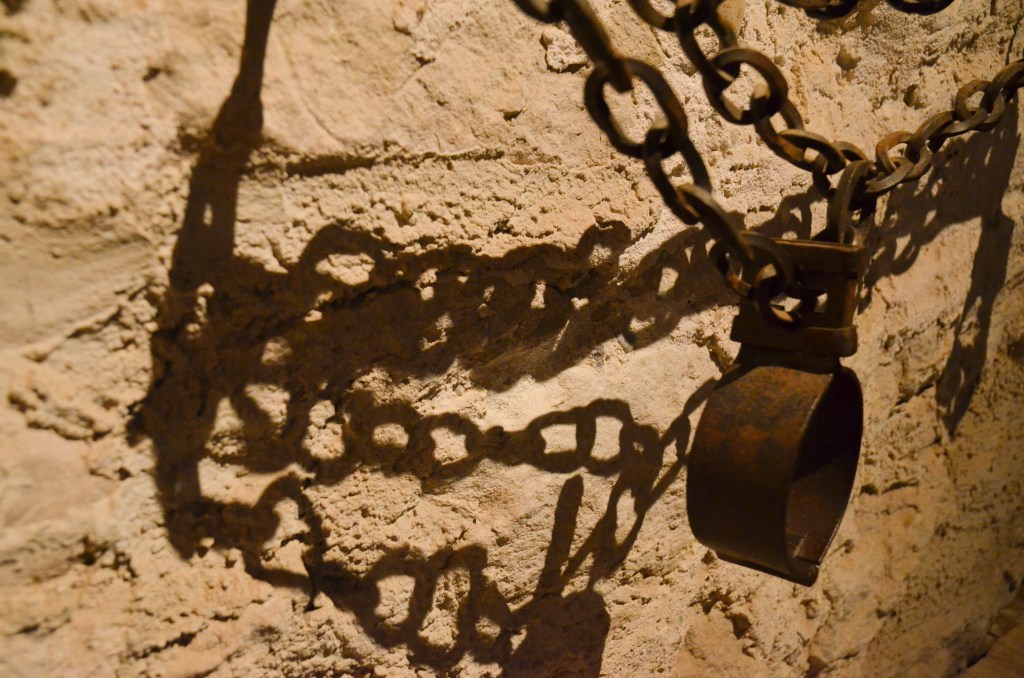
Some of the beautiful carvings on the outer doors reminded me of the Pennsylvania Dutch folk art of my grandparents’ Lancaster County community where they decorate kitchenware, quilts, and tourist souvenirs. Here, similar designs are a sharp contrast with the dark prison cells, cold stone walls, and chains just feet away:
This “execution ballad” tells the story of Hans Haslibacher who was killed in Bern in 1571.
Among its lyrics:
His head when struck off would spring into a hat and laugh aloud;
The sun would turn blood-red;
The town fountain would spew blood.
Anabaptists might eschew the practice of violence, but they certainly didn’t seem to mind some bloody storytelling.
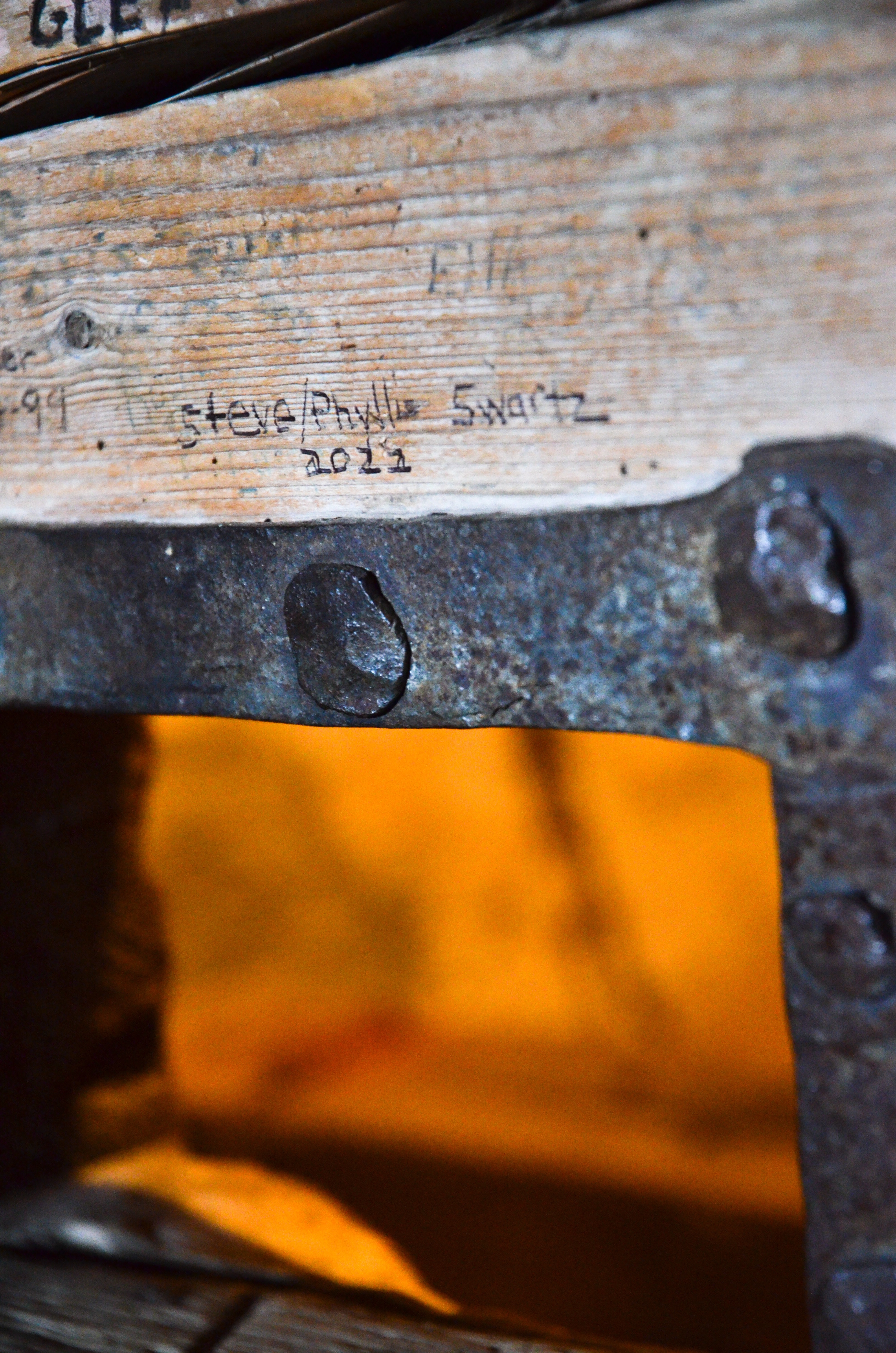
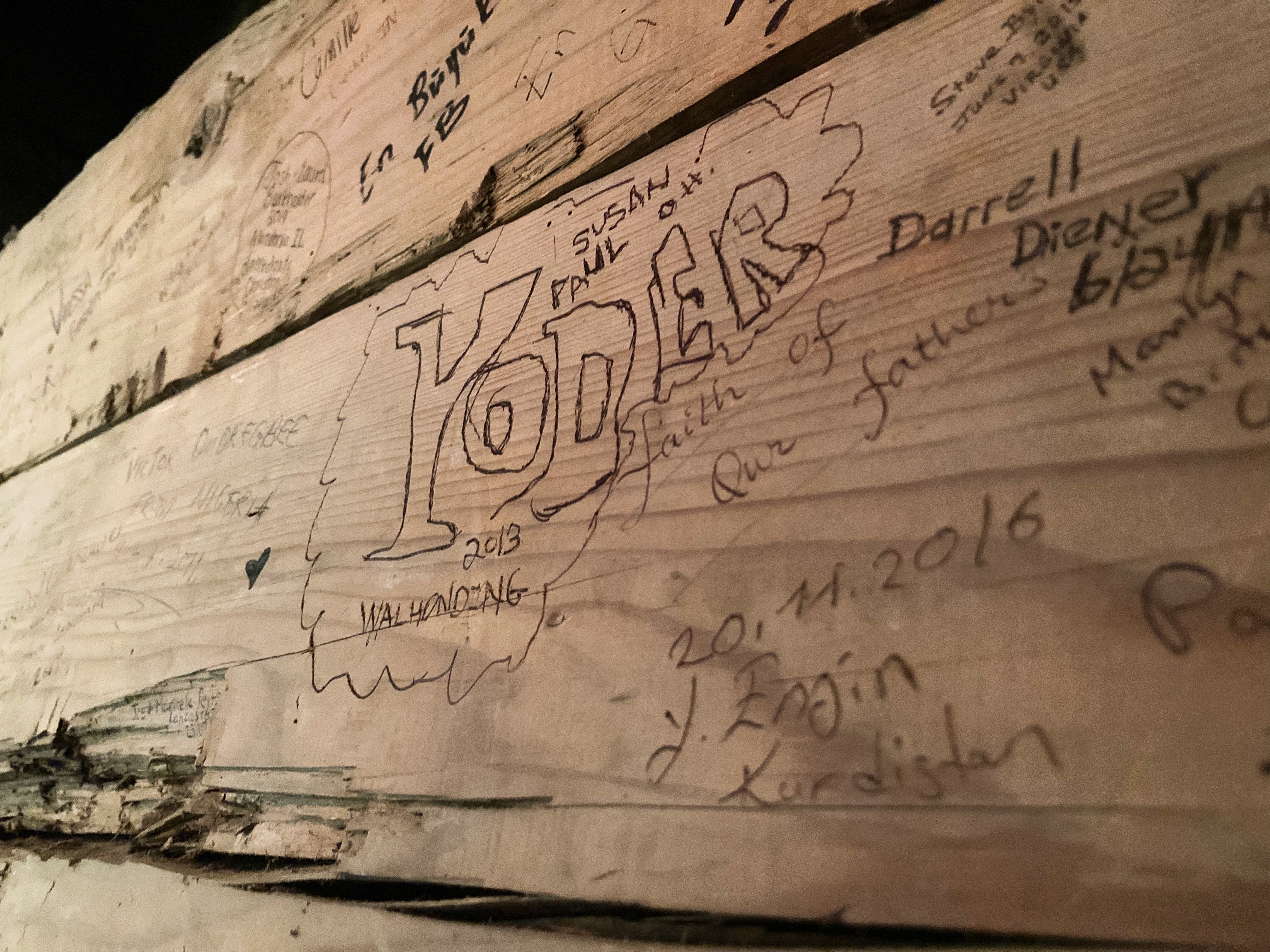
Our little Anabaptist group met a much warmer welcome at the castle than our predecessors. We found lots of familiar contemporary names and communities etched in the walls: Yoder, Miller, Beachy; Goessel, Kansas, Goshen, Indiana. The caretakers of the castle have, it seems, have recognized the power of material culture to keep stories alive and to connect contemporary actors with a meaningful past.
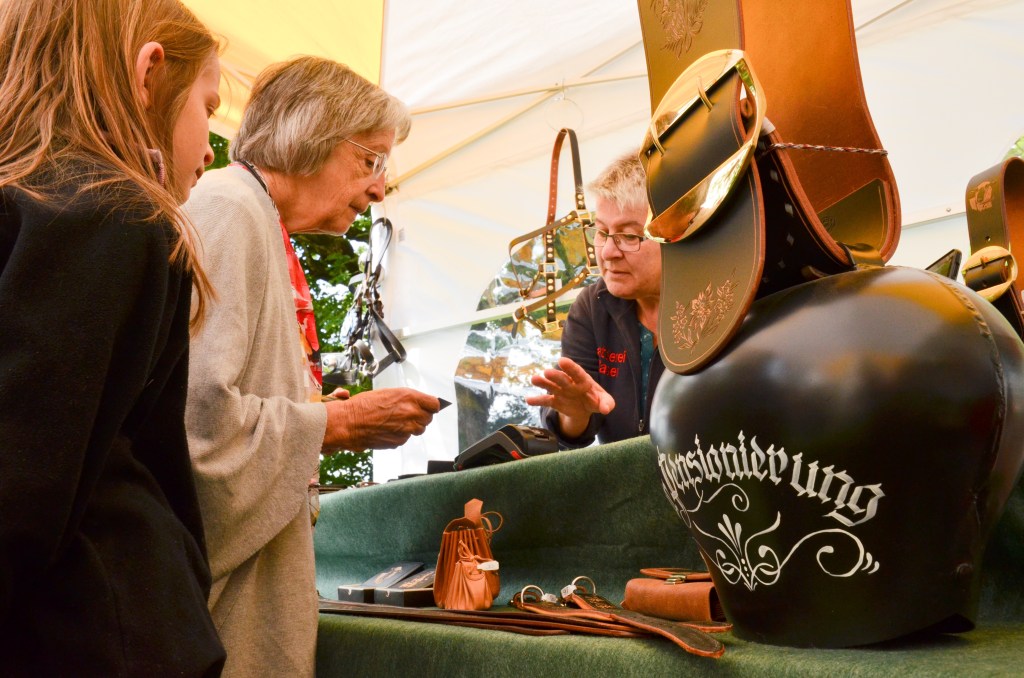
After touring the castle we enjoyed a lovely arts-and-crafts festival on its grounds and even bought some souvenirs.
We began the first leg of this part of our journey in Rome. After seeing Pompeii and the Colosseum and contemplating the power and scope of the Roman Empire, we pivoted to the early Church, which emerged within it.
It’s so easy to lose sight of the fact that Christianity was a deviant sect that stood in direct opposition to Rome’s authority. Seeing the Colosseum and recognizing the scope of this authority highlights the level of risk the early believers took to proclaim Jesus (i.e. not Caesar) as Lord.
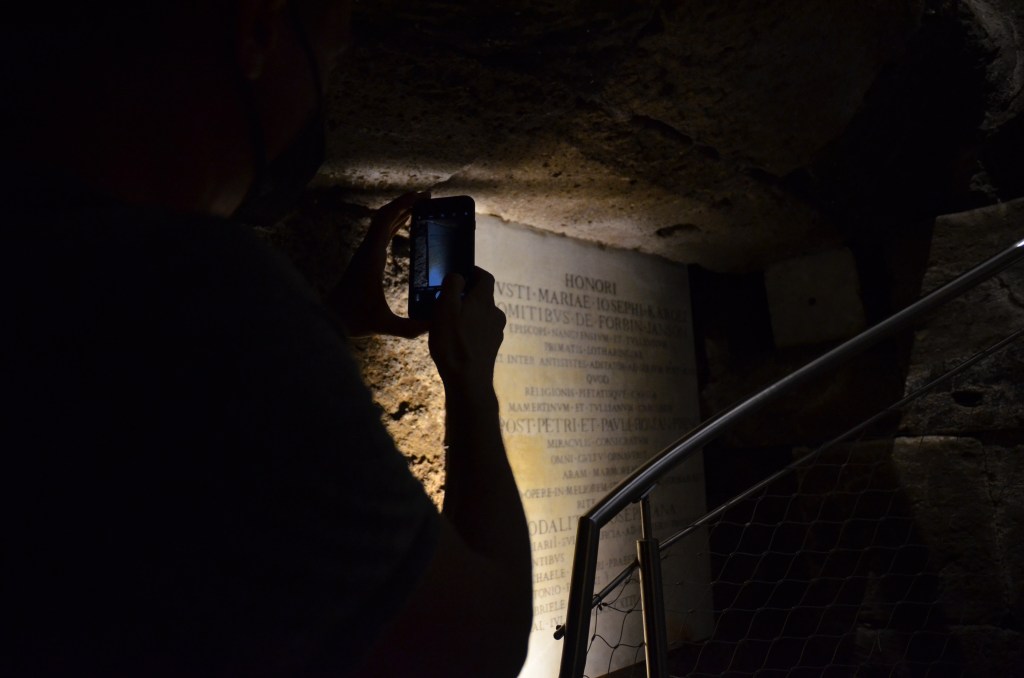
Our first stop was Mamertine Prison where both Peter and Paul were held for advancing this proclamation:
In the cell where Paul probably wrote some of the letters that we now read in our New Testaments, including this from II Timothy:
As for me, I am already being poured out as a libation, and the time of my departure has come. 7 I have fought the good fight; I have finished the race; I have kept the faith. 8 From now on there is reserved for me the crown of righteousness, which the Lord, the righteous judge, will give me on that day, and not only to me but also to all who have longed for his appearing.
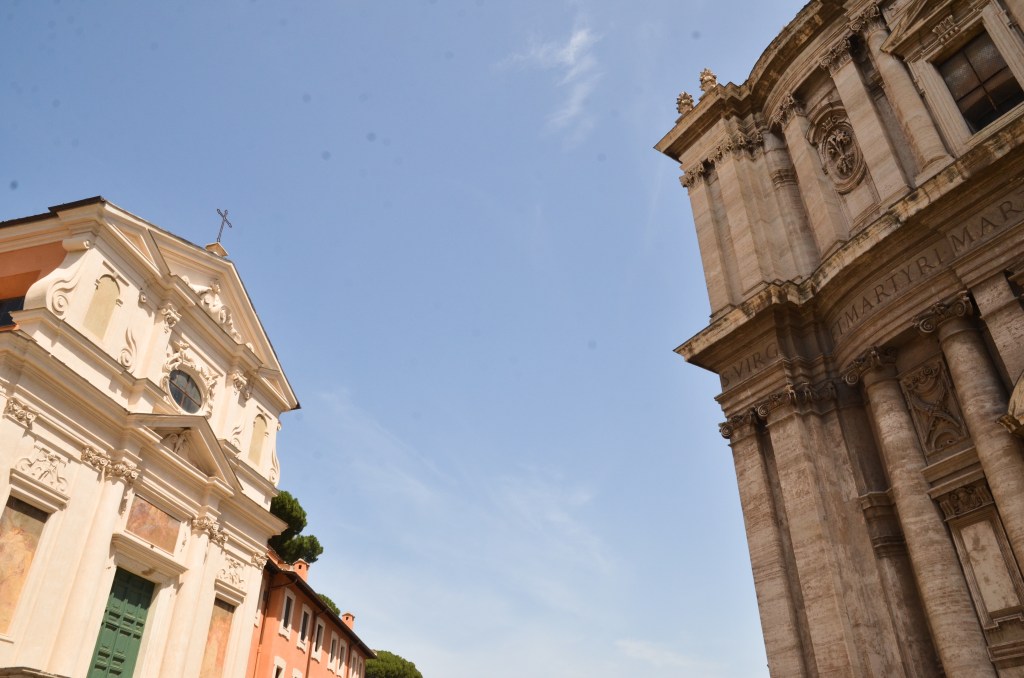
The building on the left is the prison. The one to the right is a part of the Roman forum. These men knew Rome and its power.
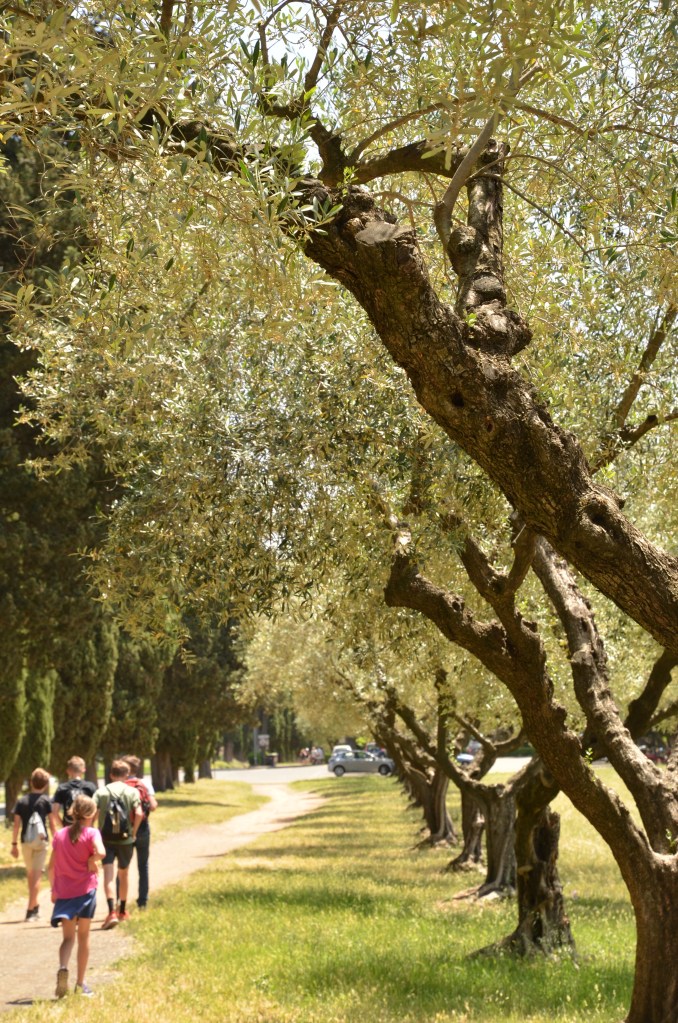
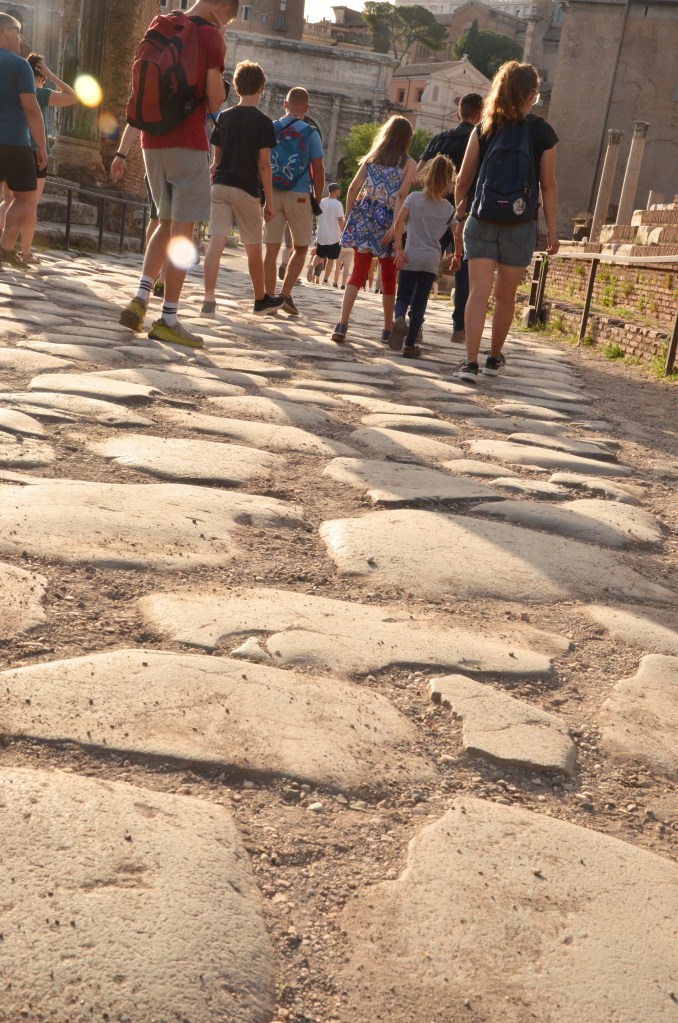
Then we took a walk on the Appian Way, the highway that led into Rome. Paul would have walked here as he entered Rome.
We also took a fascinating tour of the catacombs (no photos allowed). I had no idea what an elaborate and enormous system the catacombs were–and still are. Only a small portion is open to visitors and there are plenty of areas that remain untouched. The Church might still have been a deviant sect, but it had some kind of resources. It certainly had numbers.
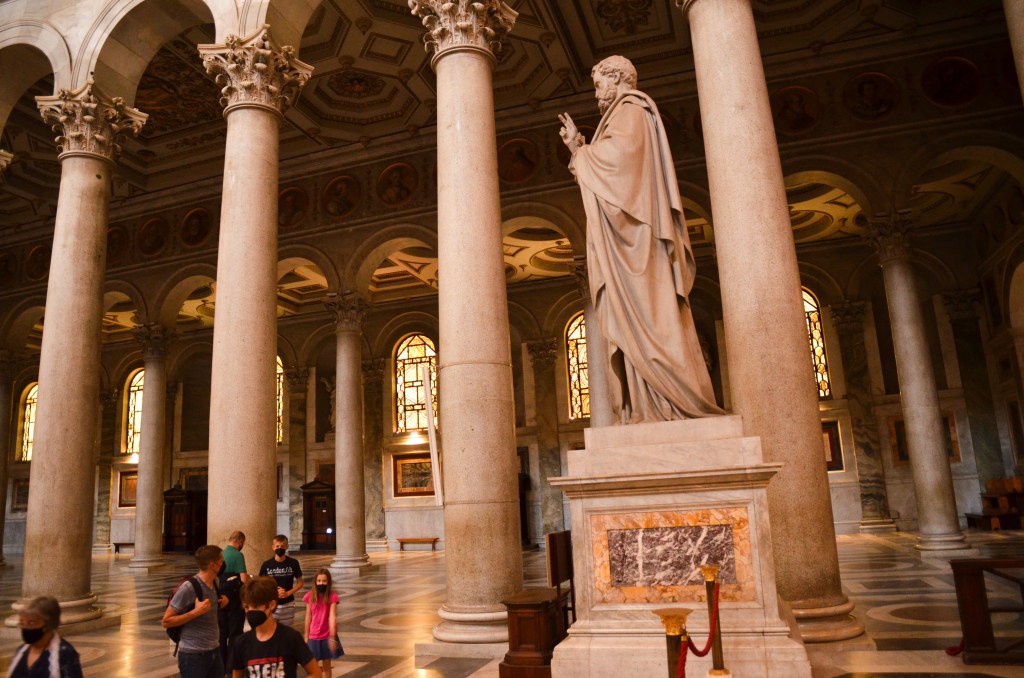
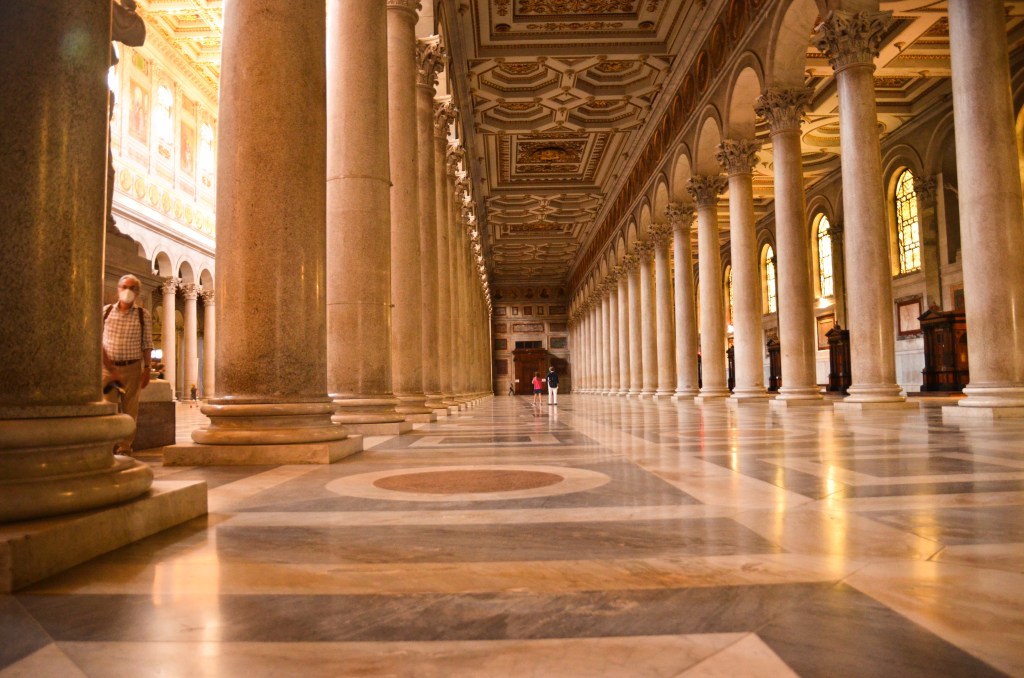
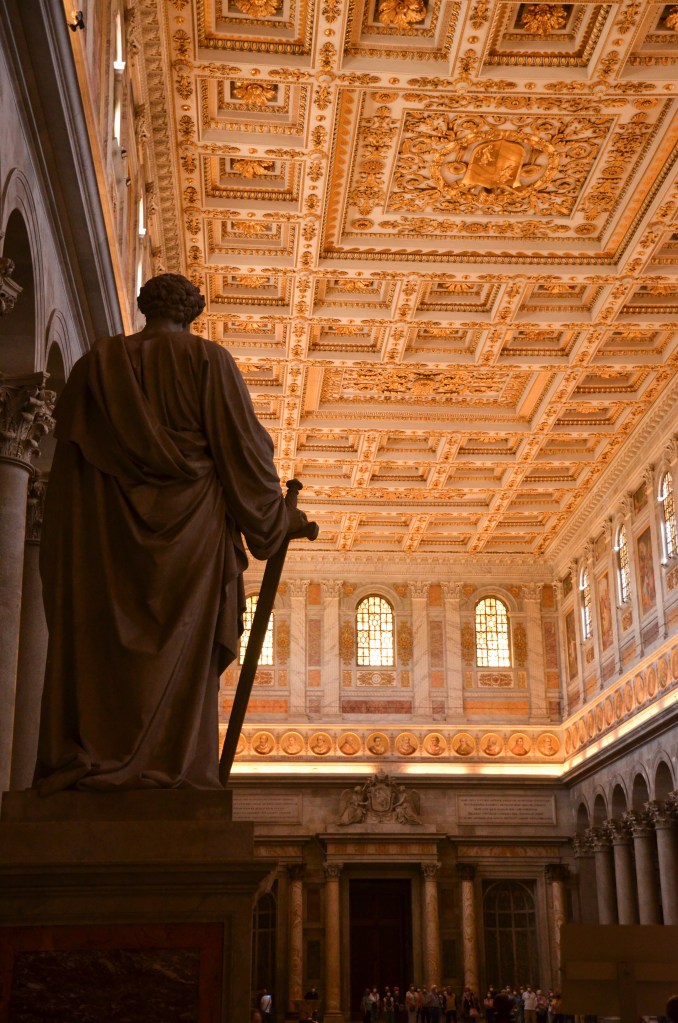
Next stop: the Basilica of St. Paul’s Outside-the-Walls. St. Paul is believed to be buried here. The Basilica also houses a length of chain that, according to tradition, kept him in bondage.
We spent quite a bit of time here, exploring the huge space and examining the magnificant artwork. Deviant sect no more, the Christians who built this structure clearly had plenty of economic and cultural capital on their hands. The large cafe outside selling sandwiches, coffee, and gelato continues that tradition. Apparently American mega churches aren’t the only ones to have that idea.
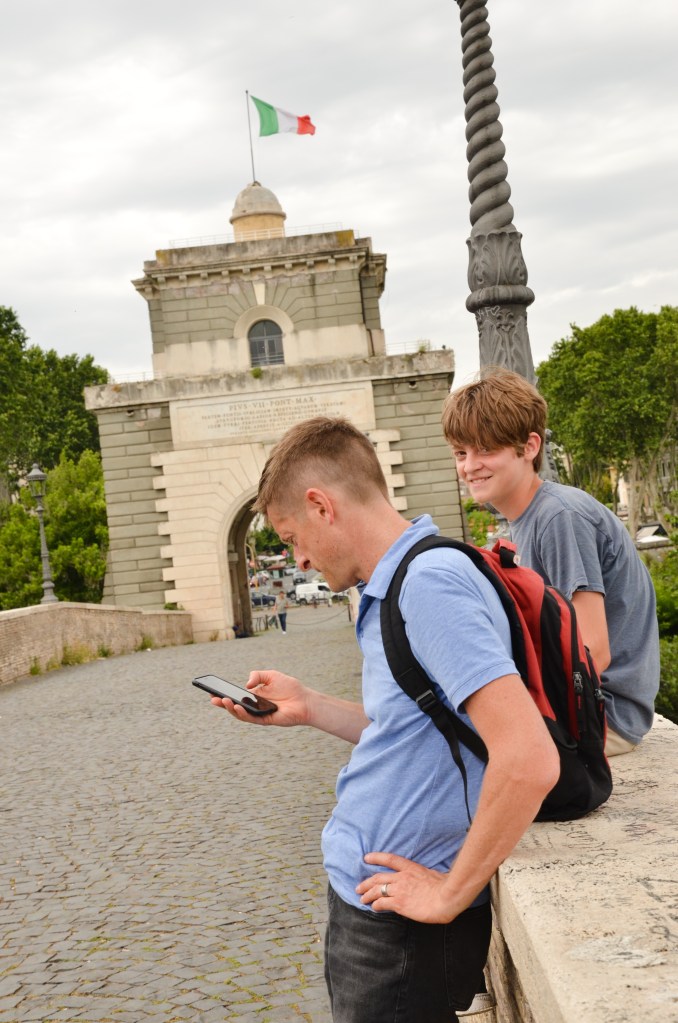
Next, David read a mini-history lesson at the Milvian Bridge (or the modern-day equivalent of it). Here Constantine defeated his enemy in battle. He looked up into the sky, saw a cross and the words, “in this sign, conquer.” And he certainly did his part to transform Christianity from an anti-empire, pacifist, egalitarian sect into an agent of state and military might.
So that was our whirlwind historical tour of Rome.
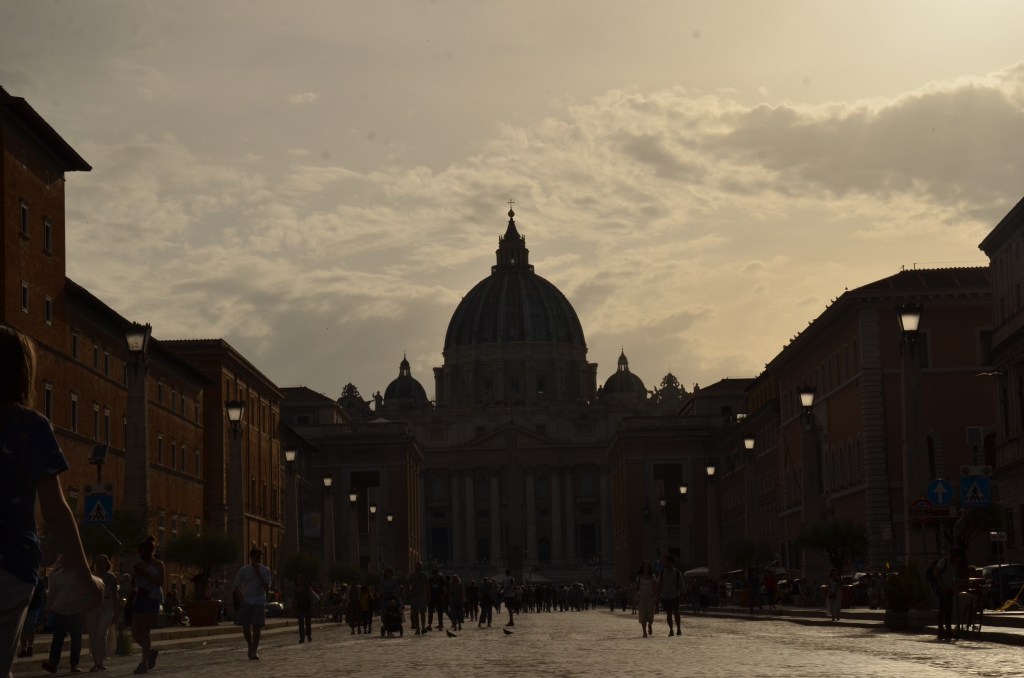
We ended with the Vatican. We timed our visit for a Wednesday when the Pope makes a public appearance in St. Peter’s Square. If you look really, really closely at this next picture you can see him in his Pope-mobile, slowly making his way through the crowd to the front:
The Pope gave greetings in a number of languages, as well as a short address. There wasn’t an English translation for the address, but we definitely heard him mention “fake news,” and “superstitions” in a not-very-approving tone of voice.
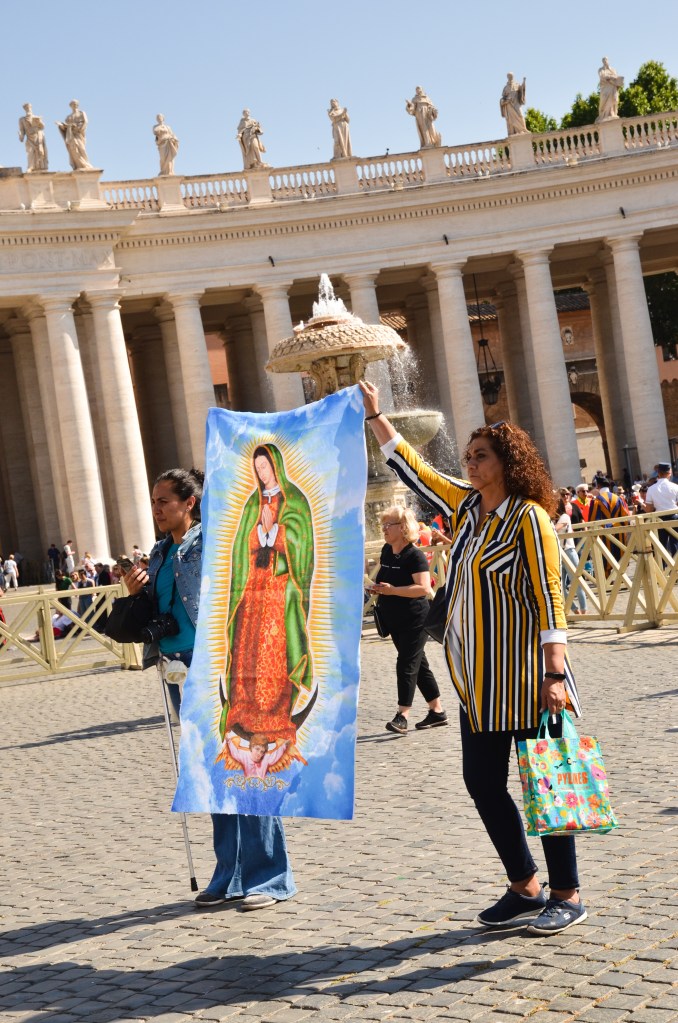
I, of course, enjoyed watching the people, who showed up with lots of rituals and material culture to demonstrate, presumably, religious identity, devotion, and of course, curiosity.
I think the thing that stands out to me most from Rome is the contrast between what Christianity was and what it so quickly became. The displays of wealth, power, and religious opulence are everywhere. Christians, it seems, are tempted by the same spirit of Empire as was Rome.
If you didn’t know to look for them, one could so easily miss the other–more important–part of the story: the jail cells, the catacombs, the resistance against Empire.
That was one of the kids, commenting on their first sighting of the Roman Colosseum, which is an architectural wonder that, just for the record, none of us has seen before (he eventually confessed, after holding to his story for a few minutes, that the “memories” were of a Google Image search).
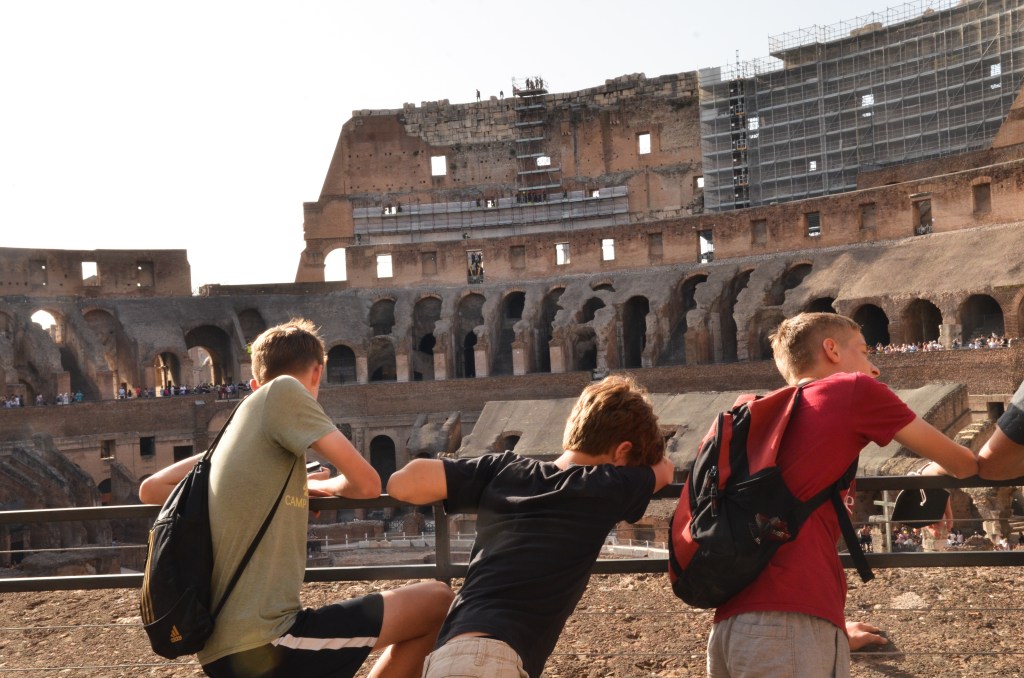
The Colosseum is breathtaking. Even my super-wide-angle lens can’t come close to capturing it. Every hour, 3,000 people are admitted to look around and imagine what it must have been like to be a part of the empire that constructed it.
Empire is certainly the right word. Rome was a monster with blatant disregard for human life and for the natural world. Hundreds of thousands of lives were taken in this spot, through slave labor, bloody gladiatorial combat, and who knows what else–all in the name of Empire. I was just a little bit heartened to know that the gladiatorial events died out as Christianity spread. At the same time, it is beyond sobering to remember that so much of western civilization is patterned after this. The legacy of empire still taints our culture, politics, art, architecture, language, literature, law, and even our religion.
The teenager who “remembers” the Colosseum might be joking, but there’s a reason we feel a sense of connection to places like Rome and Pompeii. Whether we like it or not, they’re part of our story.
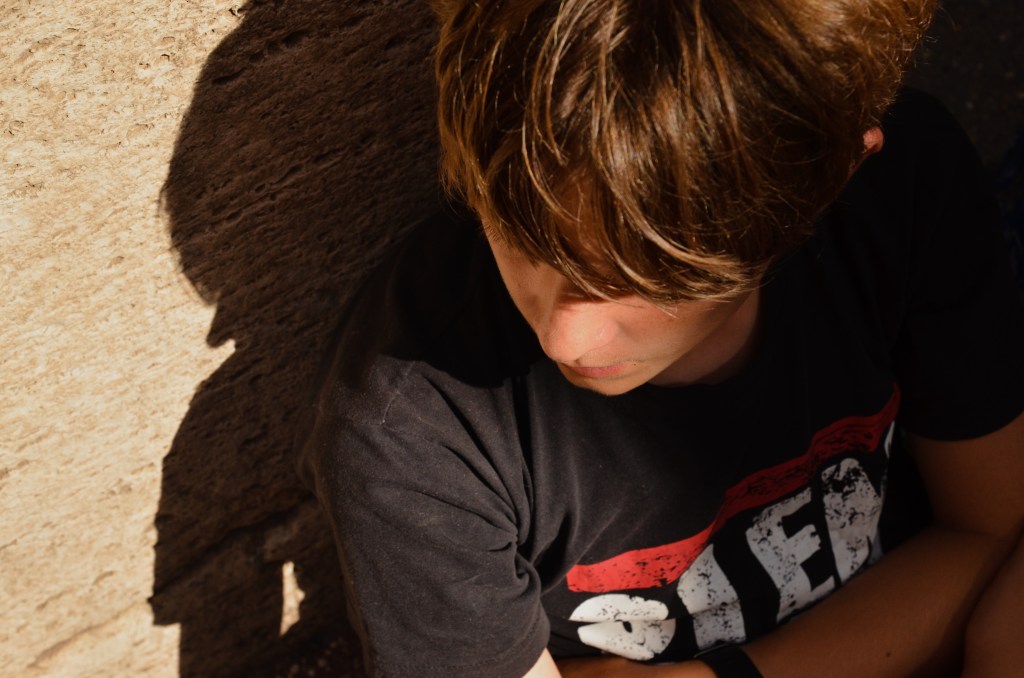
Here’s David hitting his stride as our historical narrator. Andrew is definitely as intrigued with all of the historical details as he looks in the picture.Ben contemplating the brutality of Rome–or thinking about what we’re going to have for dinner.In the Roman ForumRoman water fountains were a highlight. It’s hot here!For some texture, this is Jonathan’s modern art contribution: the restaurant ceiling during dinner.Our evening view.




















 Lisa Weaver Swartz