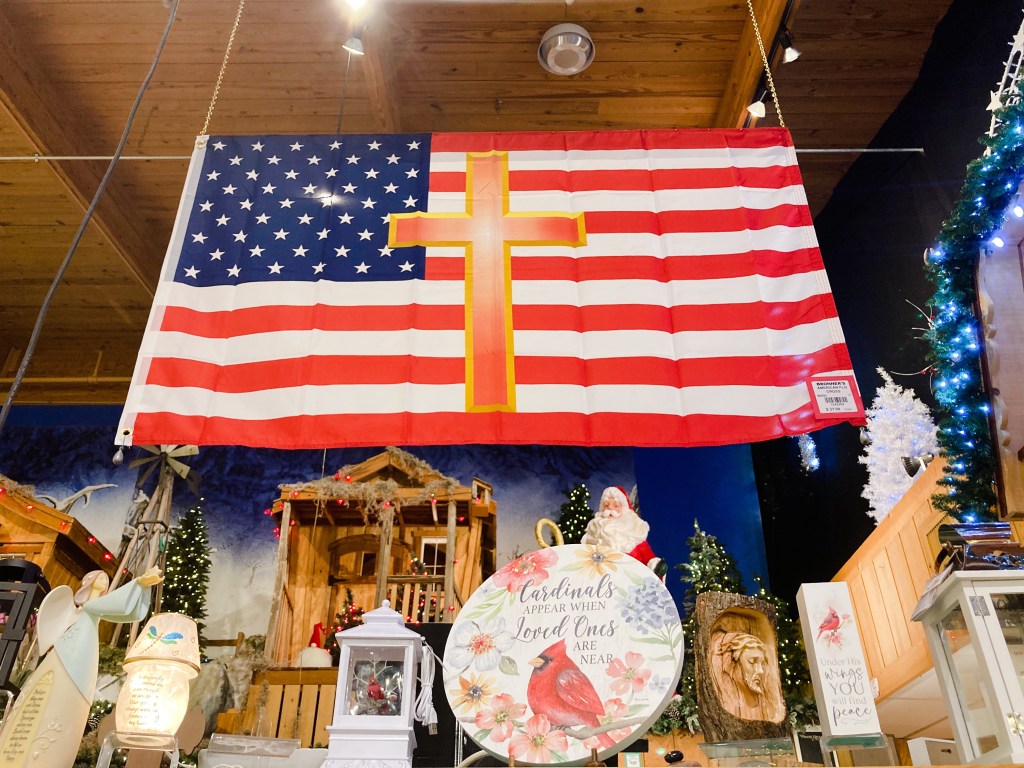
Happy 4th! Today I’m re-posting an extension of a photo essay I compiled last summer while on a family road trip in Michigan. It includes various sociological observations, most notably, the fusion of Christian symbolism with American identity in material culture.
For those interested in understanding Christian nationalism and why it matters, I highly recommend my fellow sociologist Andrew Whitehead’s work. The following post is a simple reminder that the visual and material stuff we surround ourselves with both reflects and reinforces our assumptions about ourselves, our neighbors, and even the nature of God.
May we all reflect a little more deeply today on our nation’s story and on the demands of a Gospel that is not confined by the boundaries of nation, culture, and history.
***
Our drive home from the the lake took us through Frankenmuth, Michigan. In addition to German architecture, imported cheese, and overpriced fudge, Frankenmuth is home to Bronner’s Christmas Wonderland. We weren’t planning to stop, but as the enormous building came into view, all I could think was “what on earth could they possibly have in there?” So we pulled over to find out.
The parking lot greeted us with giant plastic figurines of reindeer, snowmen, and nutcrackers. As we found a parking space, I remembered that I’ve been wishing for a new Advent calendar for a few years. Perhaps this was my opportunity.
But first, a few things I spotted along the way:
Outside one of the entrances, a life-sized nativity scene establishes the establishment’s religious orientation. The red banner framing the Christmas Tree backdrop reads, “Enjoy CHRISTmas, it’s HIS birthday; Enjoy LIFE it’s HIS way.”
I couldn’t help imagining the focus group that nailed down the details of that wording.

Also notice the flags on the roof (they continued around the side of the building). I took this as a statement of multiculturalism (i.e. Christmas brings everyone together), which extended to the greetings written in many languages just inside the covered entryway (in Christmas colors, of course). The centering of the US, Canadian, and Christian flags on top of the manger scene, ended up being more of a foreshadowing of the store’s interior.


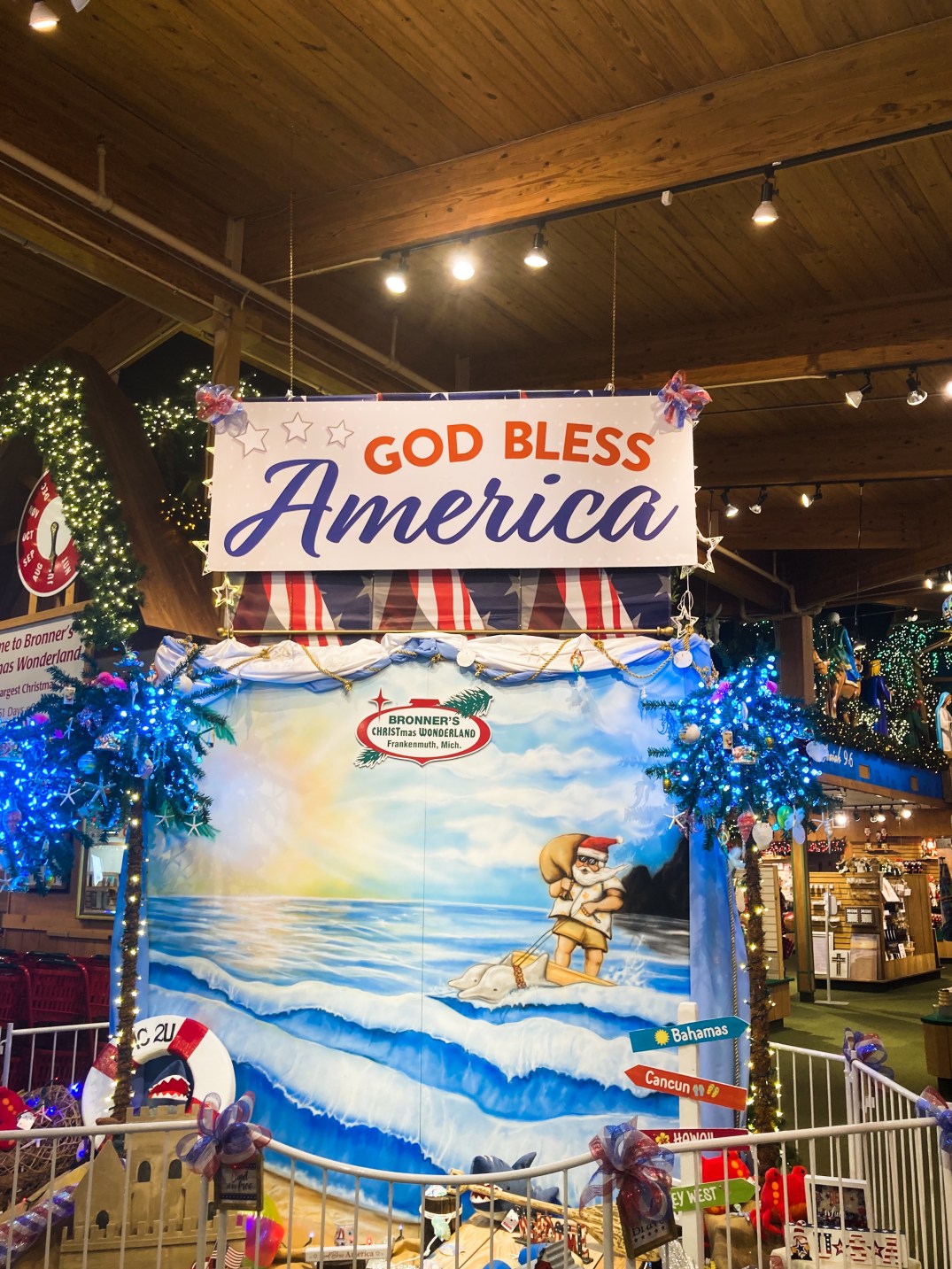
Inside, we were greeted inside by this truly confusing display. In it, Santa appears to join Caribbean dolphins, calling God’s blessing down on America.

And then, as advertised, an overload of Christmas nostalgia.
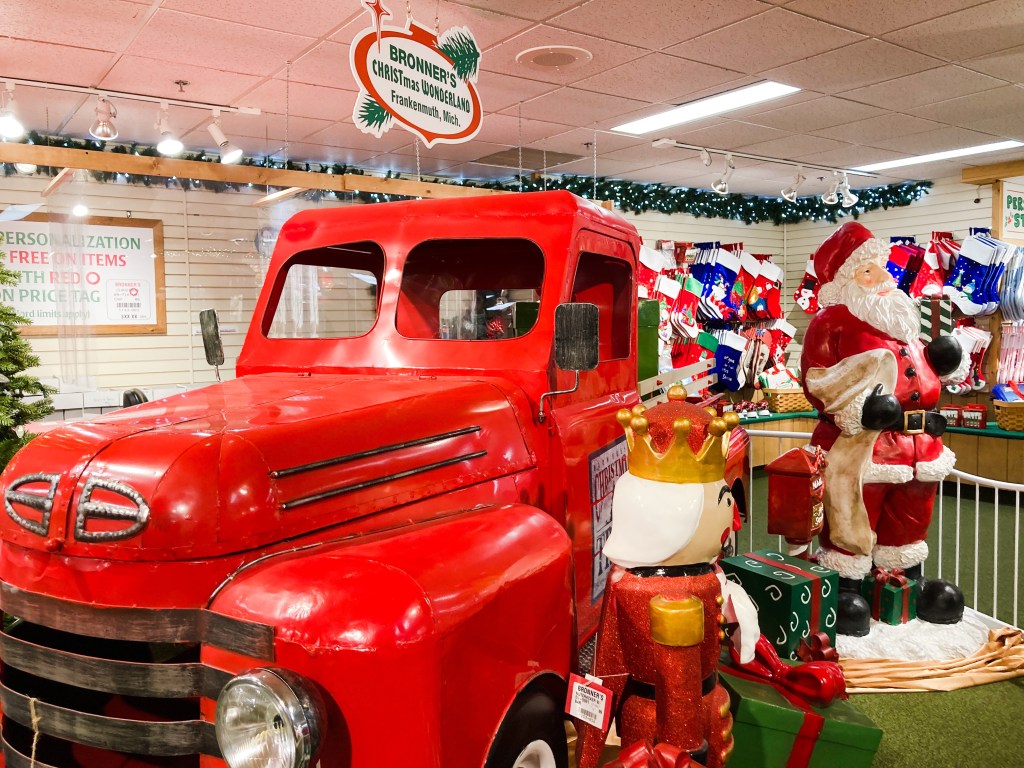
First, the sports section, with something for everyone . . .

. . . including a Notre Dame puzzle for fighting Irish fans who also happen to like dogs:

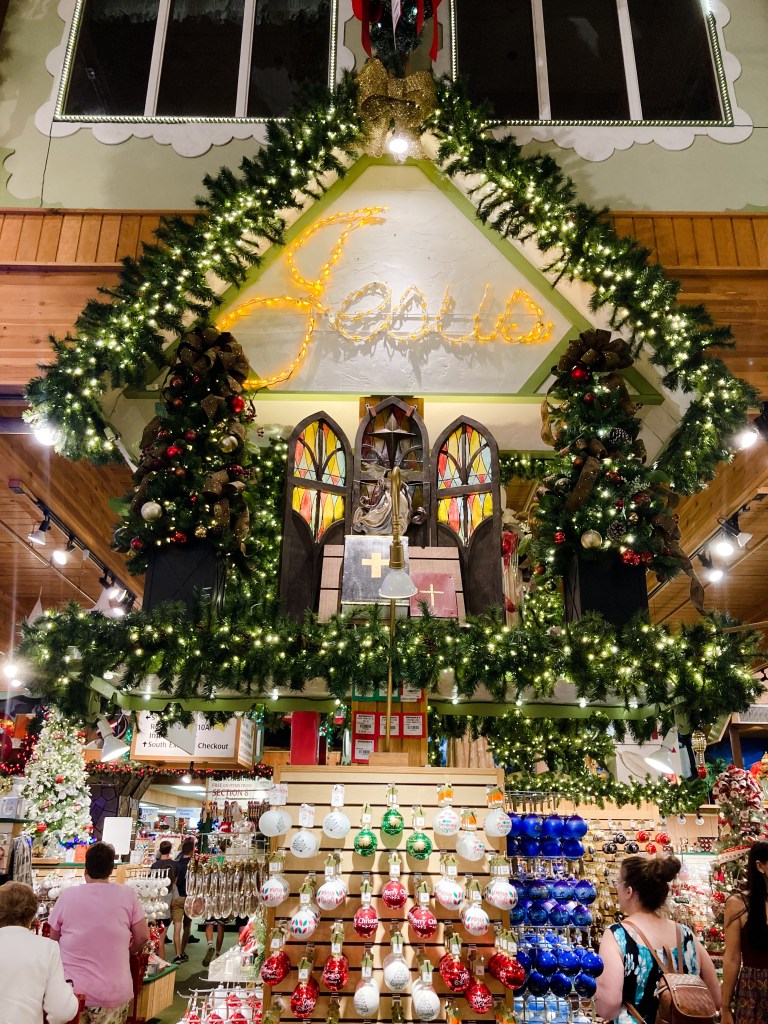
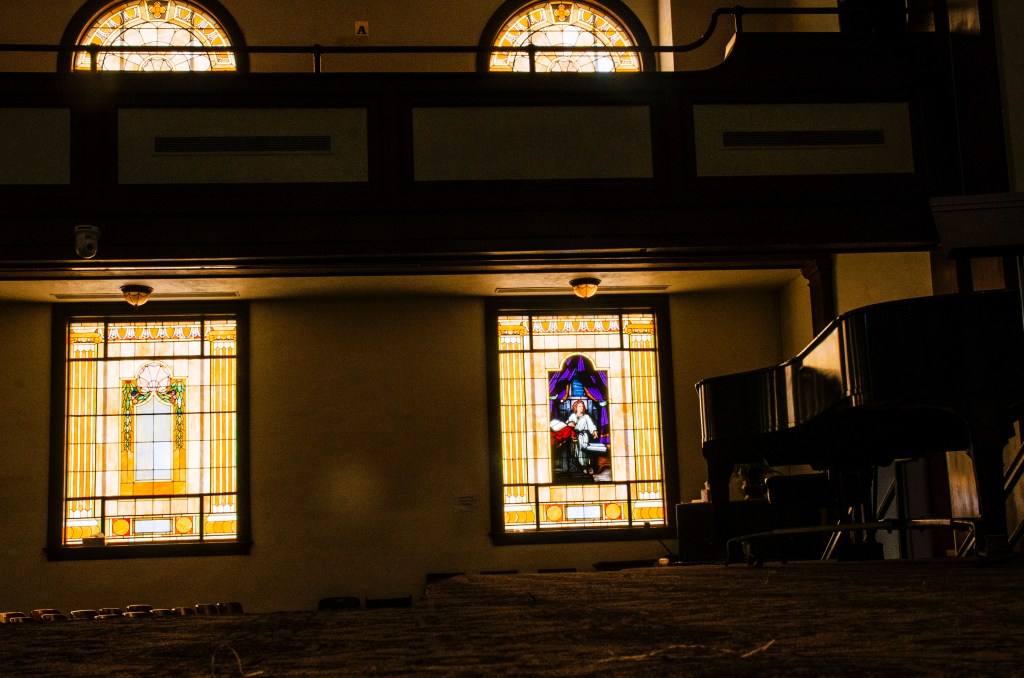
Heading deeper into the store, a set of illuminated faux stained glass windows, set in wood reminiscent of church pews, give a visual nod to the Lutheran tradition of the store’s founding family.

A few places, we found Santa kneeling beside the manger, reminiscent of the popular genre of bumper-sticker statements.

Beyond Jesus’ birth, I didn’t see any other references to the biblical narrative or the story of the Gospel. The one exception was an ornament display labeled “Noah’s Ark,” which ended up just being a collection of animal-shaped ornaments. I failed to get a picture because I got distracted by another display celebrating, presumably, children’s baptism in they typically gendered pink/blue color coding:

There was also some pseudo-theology, mostly utilizing angels:


The Christian Nationalism was noticeably less subtle. It was also threaded throughout the store, rather than segmented into categorized displays like other special interests like sports, careers, and animals.
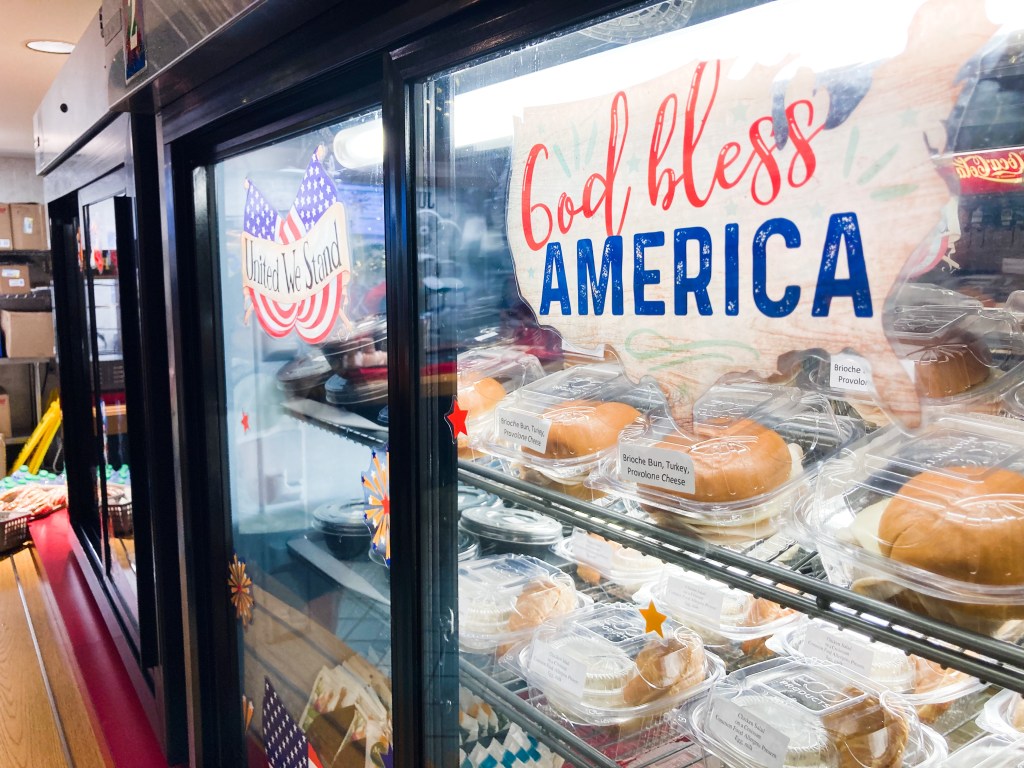

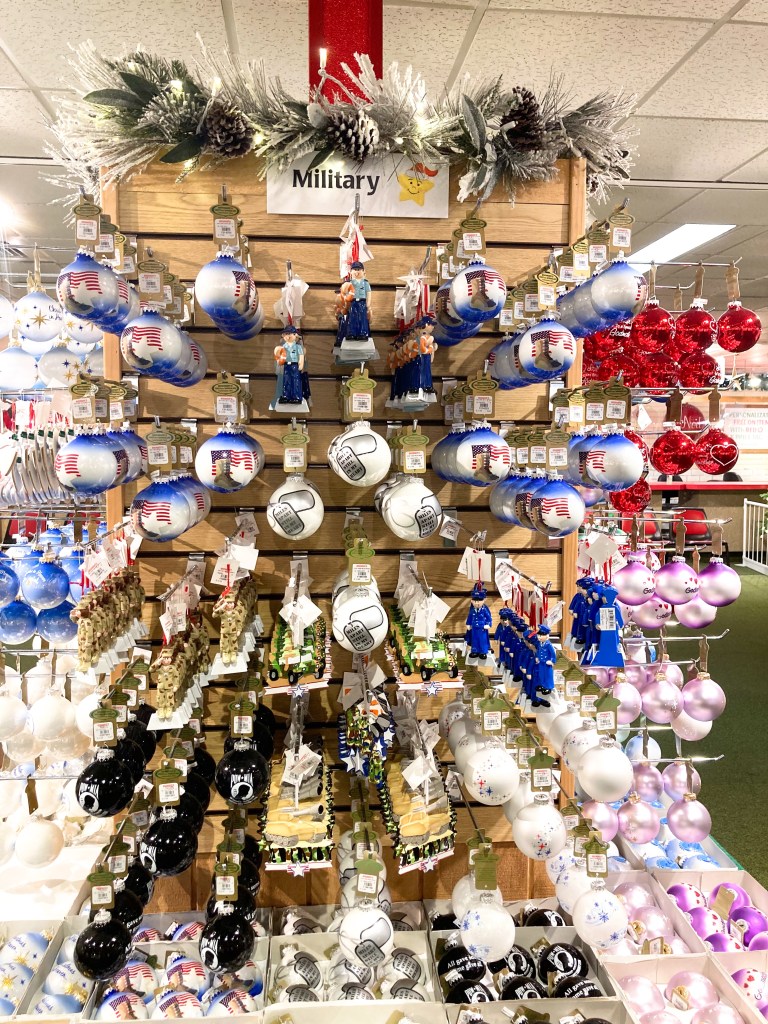

The small “Santas around the World” display hinted at a return to the entryway’s celebration of global diversity. Santa’s costumes varied to reflect various cultures. His race, however, stayed pretty much the same. To be fair, most of the countries represented were European (Ireland, Sweden, Switzerland, Ukraine, Belgium), but even the Filipino Santa had the same skin tone. In addition to his traditional bamboo hat, he also wore a very heavy robe. Filipino Santa, it seems, is prepared for all climates.

These angels did represent some racial diversity:

And then there were ornaments for just about anything from astronauts to nurses to dads to tropical-bird-enthusiasts.


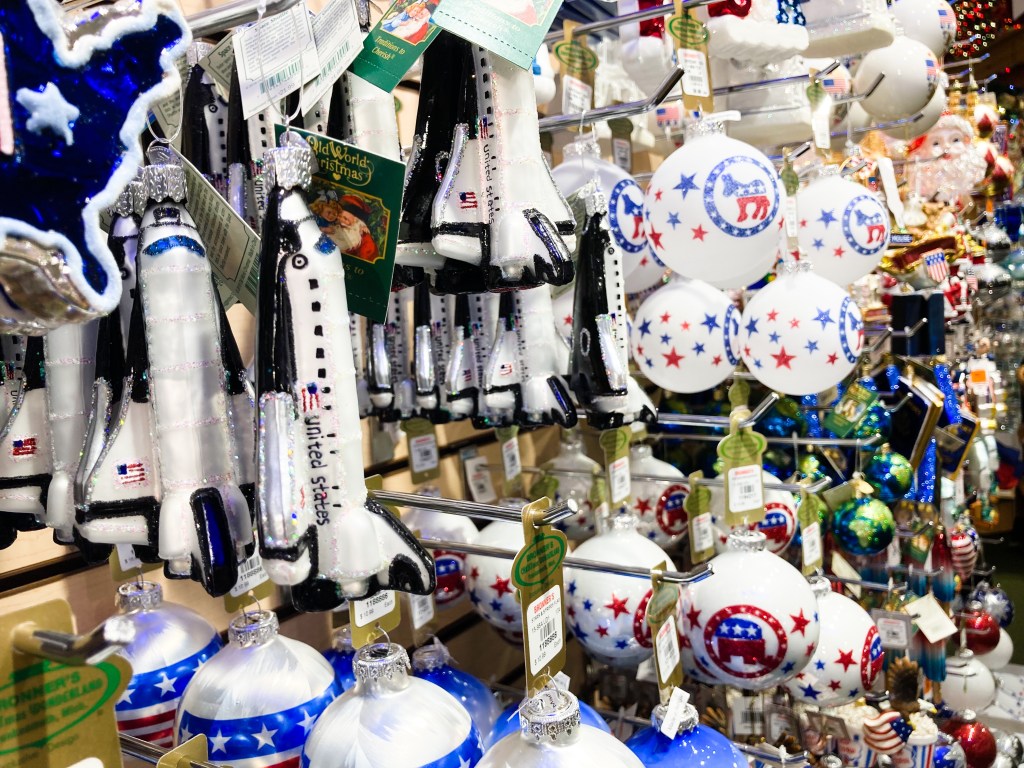
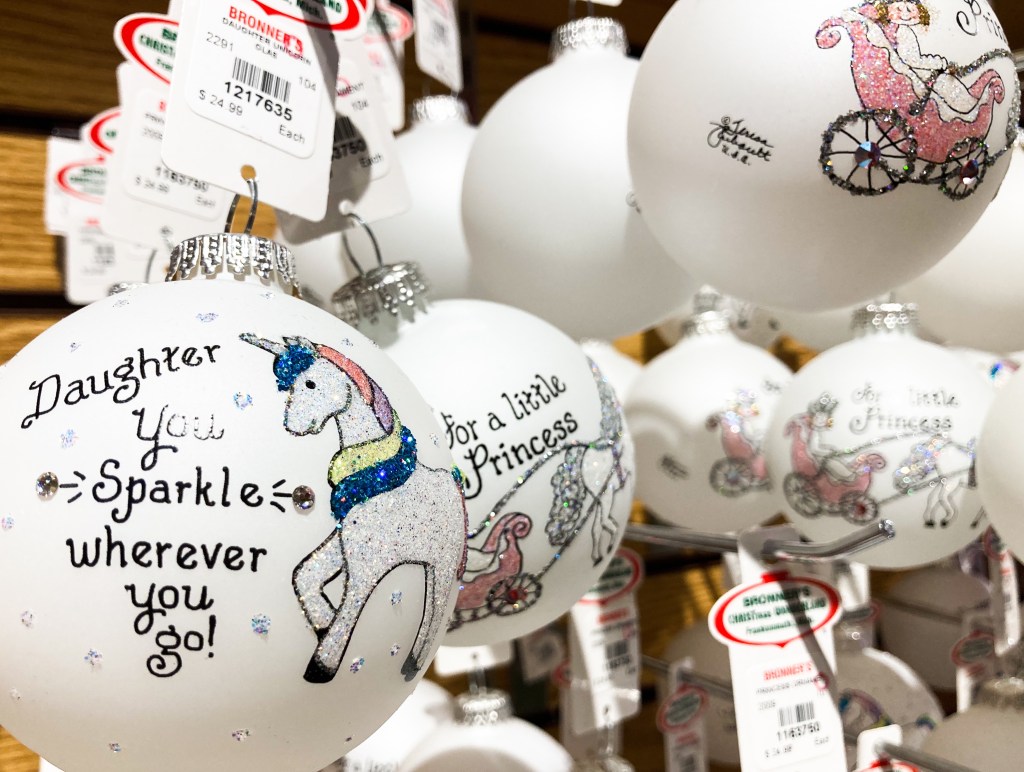





The men’s room has a baby changing station (as does the woman’s, which did not specify this with signage).

I did not find my advent calendar. There was a small display with a few options, but only one of them had a biblical theme, and it wasn’t what I was hoping for. Apparently, the rhythms of the Church calendar haven’t broken into the Advent calendar market—which gnomes now appear to have cornered.











































 Lisa Weaver Swartz